
Dante Reyes
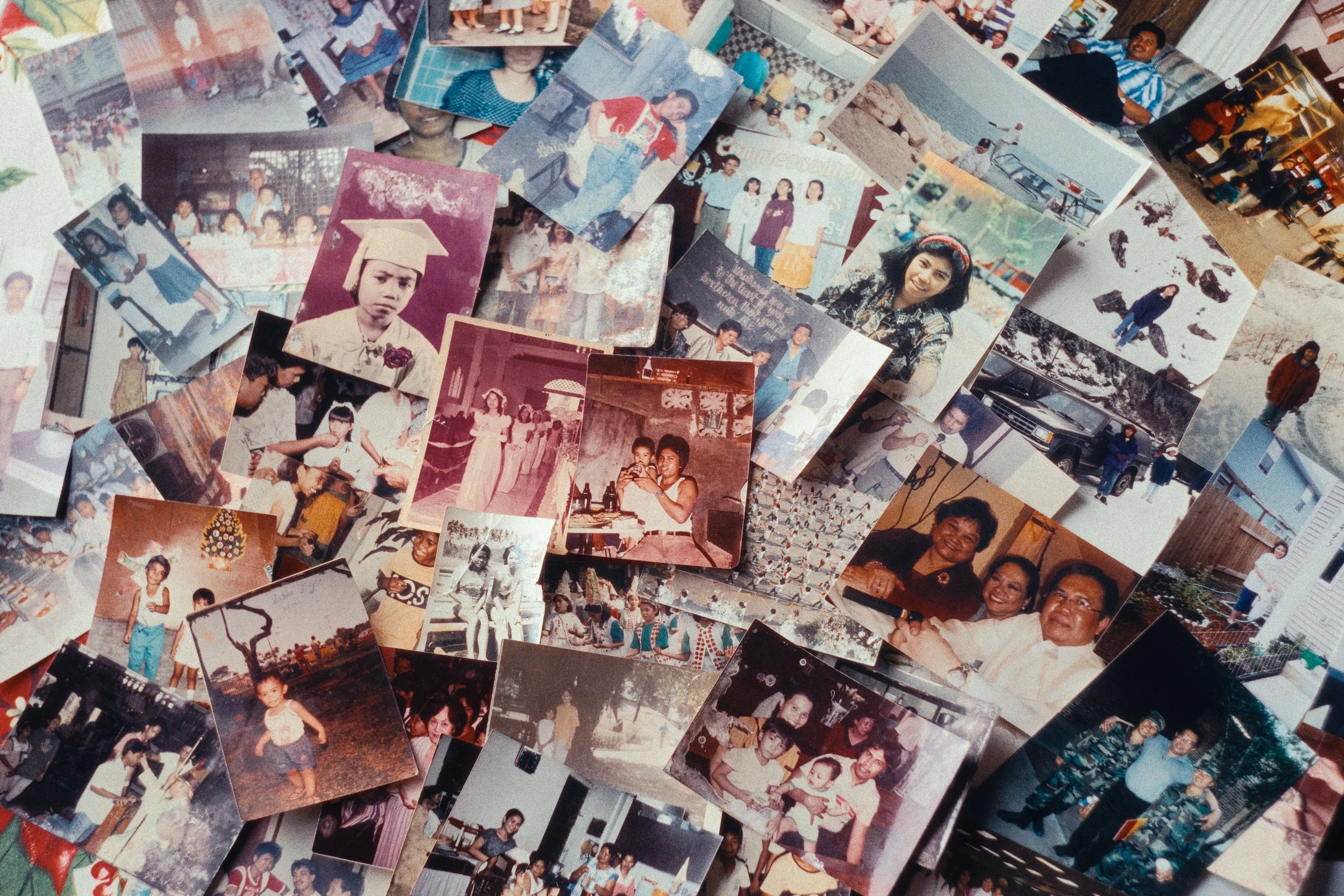
Photos from Dante Reyes’ personal collection showing his memories from around the world. (Photo by Joshua Albeza Branstetter)
Family has always been central to Dante Reyes’ life. Since arriving in Juneau in 1996, family has been intertwined with his community involvement, as he passes on Filipino traditions, language and culture to his children and grandchildren, ensuring that heritage remains a living part of their daily lives.
Reyes grew up in Aklan, a province in the Western Visayas region of the Philippines where a sizable number of Juneau’s Filipino community is from. Life in the province, he said, was very different from the busy city of Manila. In the Philippines, Reyes worked as an accountant, and like many Filipinos, he found work abroad.
He worked as an accountant for an architectural firm, living about 50 miles from the Iraq-Kuwait border. He experienced the tensions of the Gulf War firsthand, including missile attacks that required him and others to wear gas masks. He saw Scud missiles intercepted by Patriot missiles and learned of strikes affecting warehouses with Filipino workers.
In 1996, he moved to Juneau with his wife and teenage daughters through a family-based immigration petition sponsored by his wife’s parents. When Reyes arrived in Juneau, the town looked beautiful but felt unfamiliar. The quiet streets and small clusters of houses made it feel very different from the crowded neighborhoods he was used to. Reyes was struck by the town’s peacefulness and the mountains that surrounded it, creating both beauty and a sense of isolation.
“My first impression was that it’s a tiny town,” Reyes said, remembering how the houses seemed to sit along the mountainside.
He remembers arriving in September and feeling the sudden cold, unprepared for the weather.
“We came out of the airport, and we didn’t have any jackets,” he said.
Starting over in Juneau was not easy. Initially, Reyes and his family relied on his parents-in-law for support. His family couldn’t work immediately because they had to wait for a work permit and Social Security. For about a month, they were stuck waiting and hoping things would work out. When he applied for jobs, many employers said he was overqualified. Eventually, he got a job at McDonald’s. Though it wasn’t in his field, he said he felt grateful rather than ashamed.
“McDonald’s saved us,” he said. “It helped immigrants coming here to Juneau.”
Reyes and his wife remain close with their daughters and grandchildren. Both of his daughters pursued careers in the U.S. military and one recently retired after 20 years of service. He and his wife even cared for their granddaughter for more than two years while her parents were stationed abroad.
After some time, Reyes was able to return to accounting. He worked at a CPA firm for more than 25 years, building a stable career. But his life in Juneau was not only about work. It also became about community.
Reyes joined Filipino Community, Inc. in the late 1990s and became one of its strongest leaders. Over the years, he served in many roles, including bookkeeper, treasurer and president. He helped organize events, meals and holiday celebrations. He also helped support scholarships and other projects that helped Filipino families in Juneau.
One of the funniest memories in the community, that he remembers, comes from the Filipino basketball league in the early 2000s. During the first tournament championship game, Reyes was listed as a substitute. He stopped by the gym just to watch after coming from a swimming event — still wearing swimming trunks and a T-shirt. During the game, injuries left his team with only three or four players. They needed one more — so Reyes stepped in. His team ended up winning the championship, even with Reyes wearing the wrong gear; a memory he still laughs about today.
Reyes’ dedication to the community extends beyond having fun at basketball games. He works to support and uplift the Filipino community through other gatherings and activities. For Reyes, culture is something you keep alive by practicing it. He believes it is important to represent Filipino culture proudly in public so people can see that Filipinos are part of the city.
He believes practicing Filipino culture means learning the Tagalog language, understanding Filipino traditions and continuing cultural values, like showing respect for elders. He hopes the next generation will carry forward both the language and the practices that connect them to their heritage.
“We don’t want those to be forgotten,” he said. “It should be passed from generation to generation.”