Richard ‘Rick’ Siangco
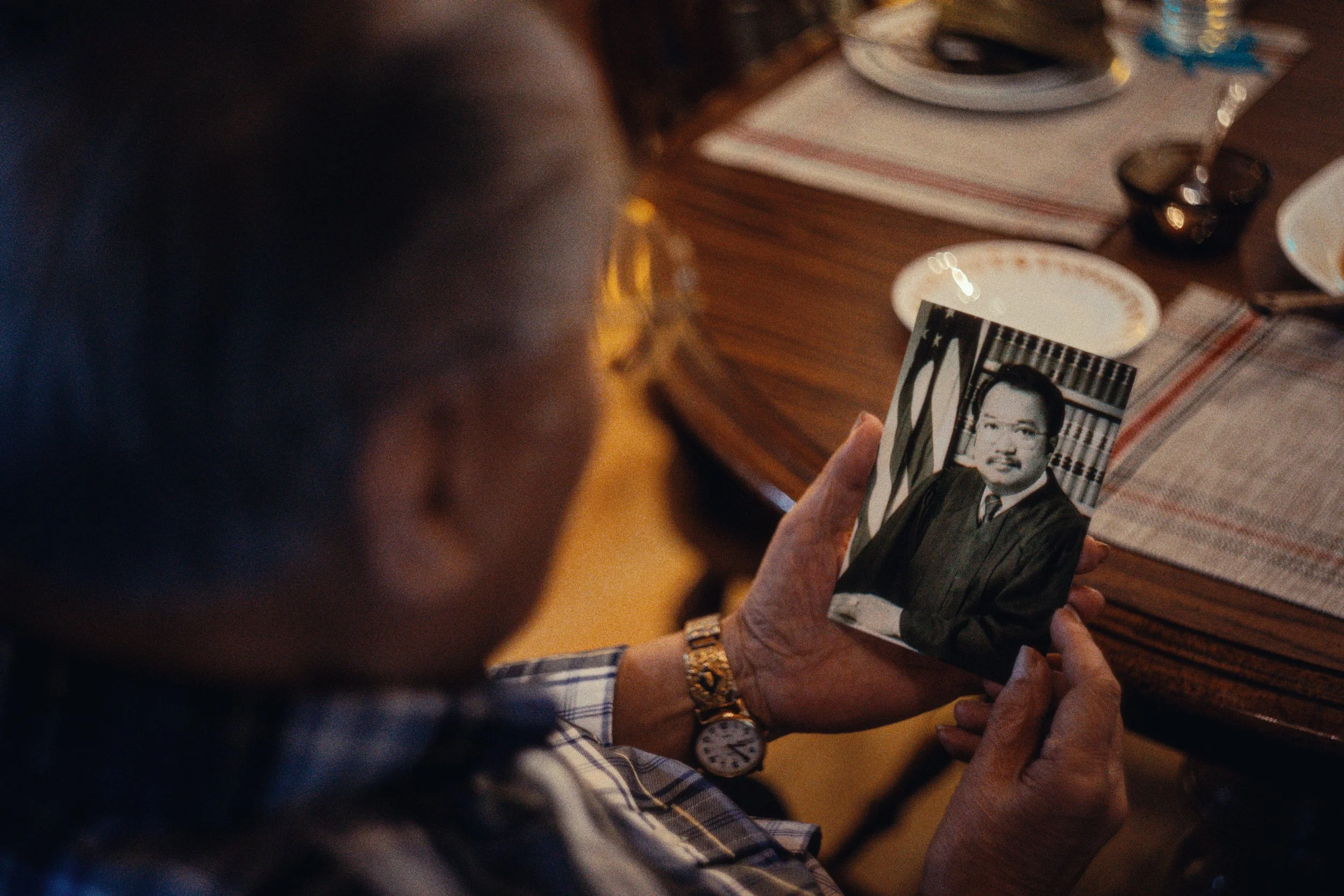
Richard “Rick” Siangco holds a photo from his days as a District Magistrate for Juneau. Siangco was Alaska’s first judge of Filipino descent. (Photo by Joshua Albeza Branstetter)
“To thine own self be true; that means be true to yourself.” This is how Richard “Rick” Siangco said he wanted to be remembered during an interview in May 2023.
Siangco was born in 1939 on the island of Moloka‘i in Hawaiʻi. As a teenager, his parents sent him to Lahainaluna, a boarding school in Maui. After graduating, Siangco enlisted in the U.S. Air Force and served for 16 years.
Less than a day after he was discharged from the Air Force and finished his last college course in June of 1967, he reported for work at the CIA in Washington, D.C. He stayed only a couple of months because he decided the job wasn’t for him. Instead, he pursued his growing interest in law and attended Columbia University, where he earned his master’s degree in public administration.
He moved to Seattle and worked in law enforcement. It was there that he heard about a civilian job opening for a radio operator with the Air Force in Juneau. He arrived in Juneau in 1968 on the Malaspina, early in the morning. He remembered eating at the City Cafe, where a man in a suit sat down next to him and paid for his meal. He didn’t realize a few days later, while getting a haircut and seeing a photograph on the barbershop’s wall, that it was Gov. Bill Egan.
The Air Force sold its communications station to Alaska Communications System just a few years after Siangco moved to Juneau. They offered to transfer him to a post in Germany, but he turned it down.
“I wanted to stay in Alaska because of the fishing,” he said.
He got a job with the Juneau Police Department and oversaw airport security. He worked there for about two years, and then the Alaska Legislature created a new position of state coroner and public Administrator. Siangco was appointed to the role in July 1971. Two months later, he handled his first case: the 1971 Alaska Airlines disaster. Siangco worked with the FBI and forensic pathologists, and identified all 111 people killed in the crash.
Almost by chance, Siangco became a judge while he worked as coroner. Juneau judges had to travel to Anchorage for a judicial conference, and the chief justice needed someone to cover the local court. Siangco said a judge came to him, asked him to raise his right hand, and from that moment, he was a judge. On his first day on the bench, defendants from a major drug raid packed the courtroom.
“My voice was OK,” he remembered. “But my knees were just rattling.”
Siangco served as magistrate and coroner for nearly 20 years and retired in 1990. He became known as Alaska’s first judge of Filipino descent, but he admitted that wasn’t on his mind while he served.
“I raised my hand to perform my duties, and that’s what I did,” he said.
As a judge, Siangco presided over cases across Southeast Alaska, in Yakutat, Hoonah and Haines. In Juneau, he was called “The Hanging Judge.”
“For some 20 years, I never smiled in court,” he said.
Outside of the courtroom, Siangco taught judo. He founded the Glacier Valley Judo Club and ran it for about 20 years. The club grew to more than 300 students and had once been recognized as the largest clubs in the United States. At one point, Gov. Bill Egan issued a declaration for an Official day of judo in Alaska.
He also spent time engaging in his other hobby — fishing — that led him to serve in another way. During a salmon derby, Siangco was headed back toward the harbor in rough water and saw a boat with its bow coming straight up. He radioed the Coast Guard, threw a rope and pulled two men aboard before their boat sank. In 1992, Gov. Tony Knowles awarded him the Alaska Heroic Medal. Siangco was only the 21st Alaskan to receive the medal since statehood in 1959.
After retiring from the bench, he went back to his home island of Moloka’i and worked as a counselor during the school year. During the summers, to maintain his Alaska residency, he worked as a park ranger at Glacier Bay National Park. He stopped working when he was diagnosed with cancer. He received treatment in Seattle and moved back to Juneau for good.
In his later life, he met his wife Delma through Juneau’s Filipino community. The two joked that they barely spoke for three years despite being at many of the same gatherings.
“He was not my crowd,” Delma said.
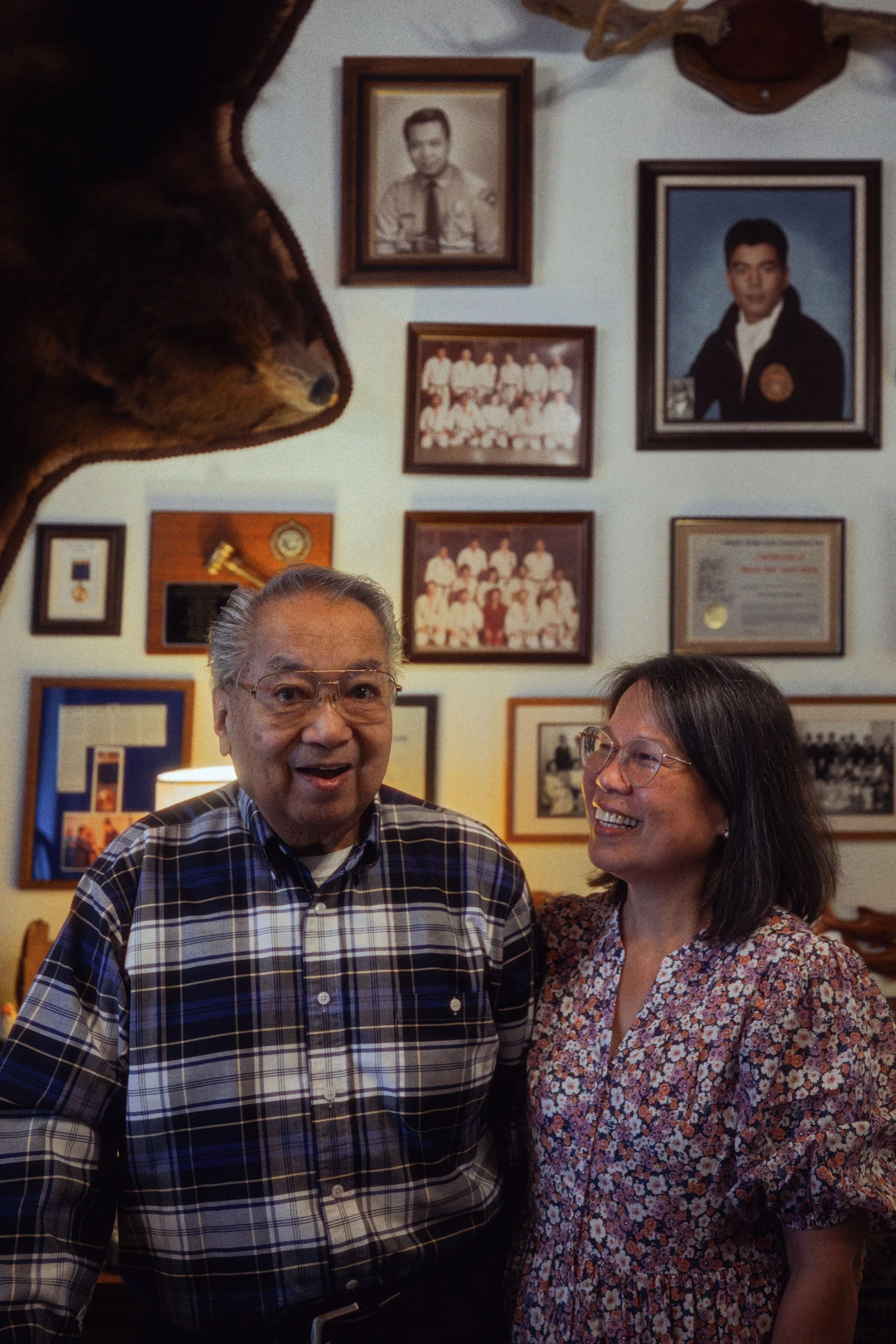
Rick and Delma Siangco in 2023 at their home in Juneau, Alaska. (Photo by Joshua Albeza Branstetter)
The two spent many years building their lives together in Juneau, in their home adorned with Siangco’s trophies, photographs and trinkets encapsulating his memories. At the time of his interview, Siangco hoped that Delma could retire so the two of them could spend more time together in Hawai`i.
In 2016, he published his autobiography with his niece, Deborah Gomez. The book talks about his youth, balancing American culture with Filipino values and his impact on his family members.
He died on August 22, 2023 at 84 years old. Along with Delma, he is survived by his son and daughter, four grandchildren and many nieces and nephews. Among his last words on record, he made clear what he wanted to pass on to future generations.
“From what you learned from me, do good,” he said.